Master Bath Refresh

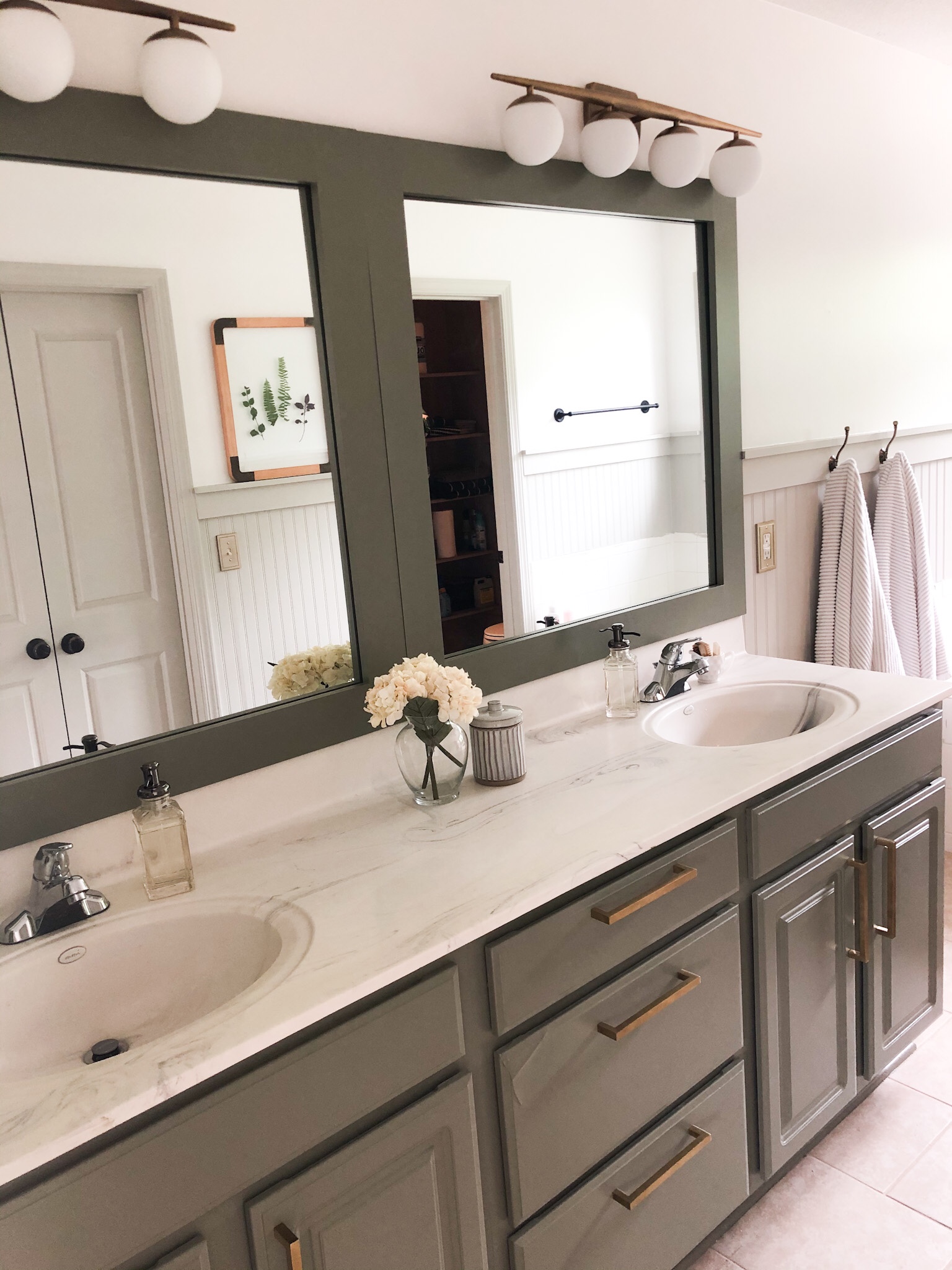
We took our early 2000’s vibe master bath and completely changed the look of it with some paint, beadboard, and new hardware. While I would’ve loved to completely renovate this space and change the layout to get rid of the tub and put in a giant shower, it just wasn’t in the budget being that we just bought our house. But it is now a place I enjoy spending time in and can live with for another 10 years until we have an extra 30K+ to renovate completely. And my dad says once you put some blood, sweat, and tears into a project, you may never want to destroy your hard work. He was a major part of this refresh. He measured and made the cuts on the beadboard and trim border. While I don’t think I could go and recreate this project myself, I could be much more efficient with many parts of this project next time.
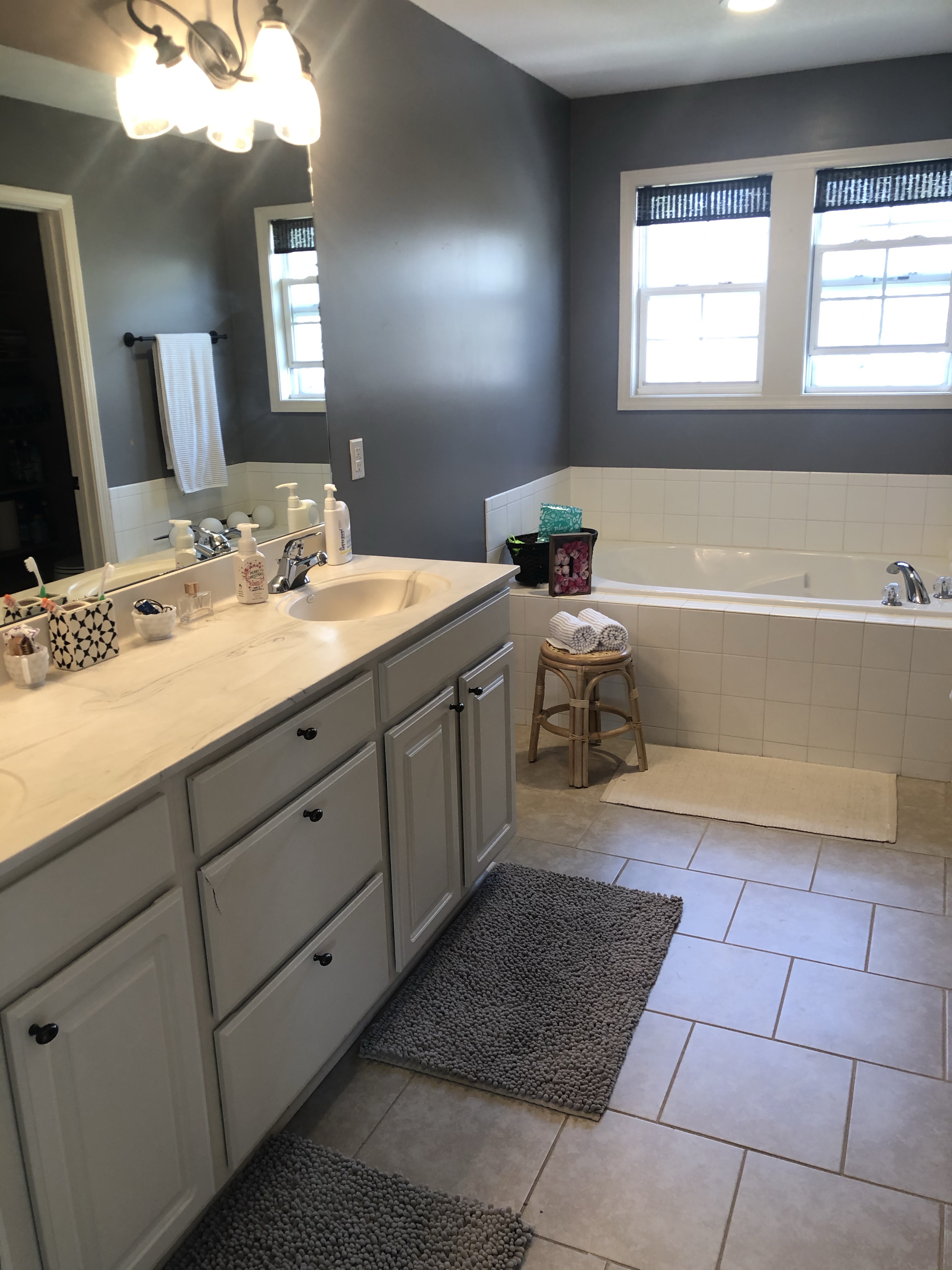
I’ve always wanted beadboard or wainscoting. It gives so much texture and richness to a room. During my research of materials and paint colors to decide what look I wanted, I came across the @thewhitebuffalostylingco page. I loved the look they were able to obtain with beadboard and a trim border. So that became the inspiration for our entire refresh. We originally planned to rip out the floorboards and base shoe to install beadboard, however I found thin sheets of beadboard with the exact look I was going for. I found these 4’x8’ sheets at Lowe’s and they were able to cut them down for me into 2’x4’ sheets that could fit into my car. I realized once I held them up to the walls in my bathroom that they were thin enough to be flush with the floorboards. Yasssssssss. This meant we didn’t have to demo the existing floor boards and replace them as well as the base shoe. If they would’ve been thicker, they wouldn’t have looked right with the existing floor boards and we would’ve had to scrap them. Let’s not add another tedious step to a DIY project, amiright?
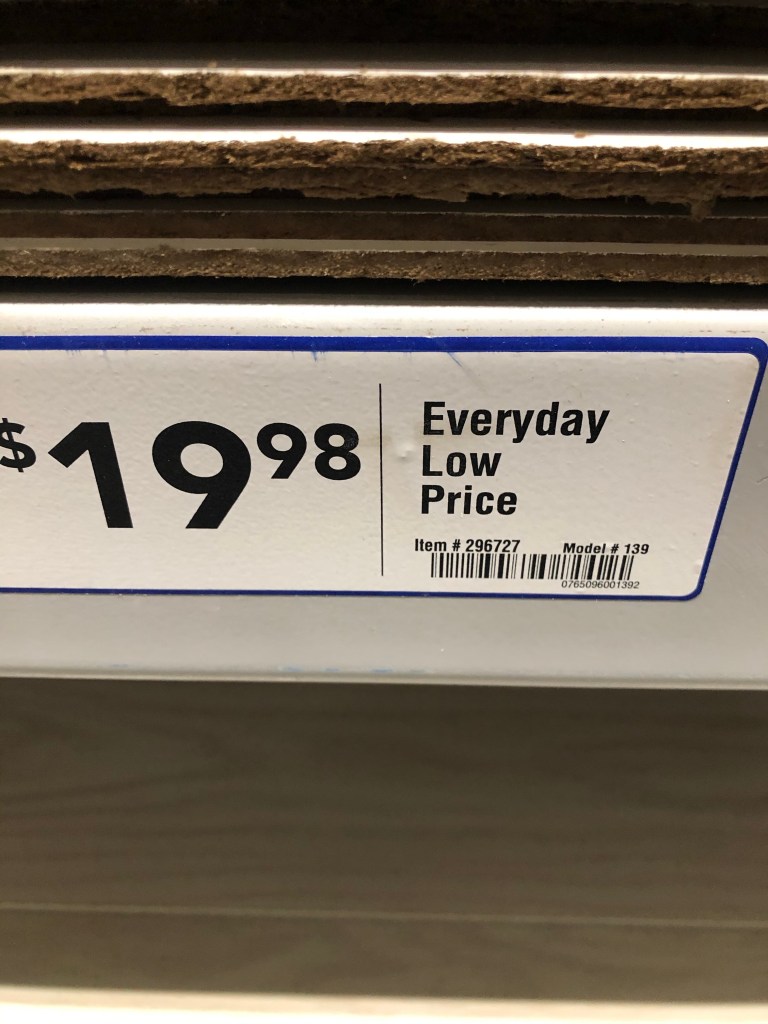
Beadboard at Lowe’s

The best part was I got all the boards I needed for less than $100. I measured around the diameter of my entire bathroom to figure out how many boards I needed. I could’ve gotten away with getting 4 but I bought 5. If you don’t do home renovations for a living, you’re gonna want an extra one. There were several mistakes made where we needed extra. For the border we used 1×4” and 1×2” pine boards.

We started with putting beadboard on the one wall in the bathroom without any tricky cuts. Because I had to cut down the boards to 2×4’, the widest we could lay at one time was 2’ across. If possible, leave them as 4×4’. It makes for less seams in the boards once they are on the walls. I was able to go back and patch them but they were still slightly visible in the end. We used liquid nails to adhere the boards to the wall but also used an air nailer to secure the boards in place. By far the most difficult part of the process was measuring and cutting the switch plate cutouts. The other difficult part was cutting the boards to fit up to the vanity counter and around the tub. Luckily my dad is an engineer who owns some saws. And still, we made several mistakes and had to scrap some boards.

Once we had all the beadboard installed, we put up the trim border.
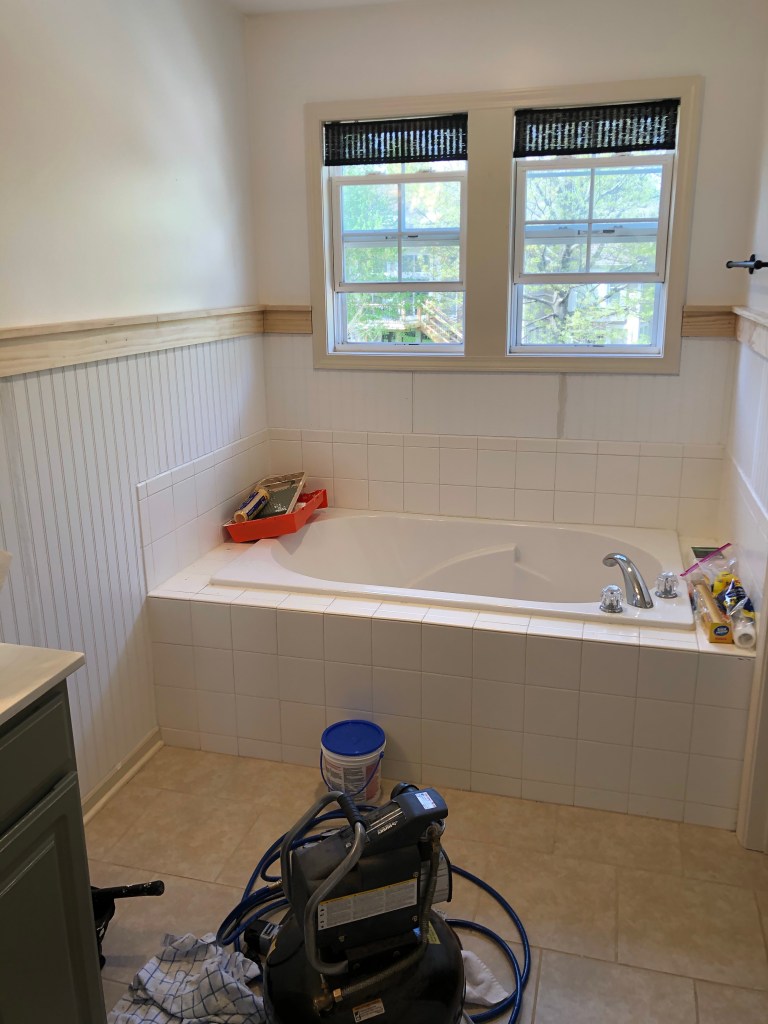
It looked so much more finished once we added the border. This part went very quickly compared to making all the cuts for the beadboard. We again first used liquid nails to adhere the pine boards to the walls, then reinforced them with the air nailer. We found out we had to use finishing nails for the top of the border (1×2” boards), however. After this was complete, I went back and filled the seams with joint compound and later sanded down to hide as much of the seams as possible. I also made sure to fill the holes made by the air nailer and finishing nails.

The next decision I had to make was what I wanted to do with the plain borderless mirror. I could’ve ripped it out and bought 2 adorable, modern, framed mirrors. These though are sooooo expensive, so to cut costs we decided to make 2 frames the size of the mirror with pine boards. It cost all of $12 and we were able to achieve the look of a custom built in mirror. See “Bathroom Vanity and DIY Mirror Frames” post.

Now for the fun part, choosing paint colors. I have had a slight obsession with green lately, so I was determined to use some shade of green in the bathroom. I can also thank The White Buffalo Styling Co for finding the most gorgeous color of green. It’s Conduit Gray by Sherwin Williams. Even though it’s called gray it looks like a deep sage green. I needed to find a color that complimented this so I chose a “greige” color. My eye kept coming back to the same color I first saw in @amberinteriors kitchen, Revere Pewter by Benjamin Moore. If there was a way I could love another color as much the green I used on the vanity, this was it.
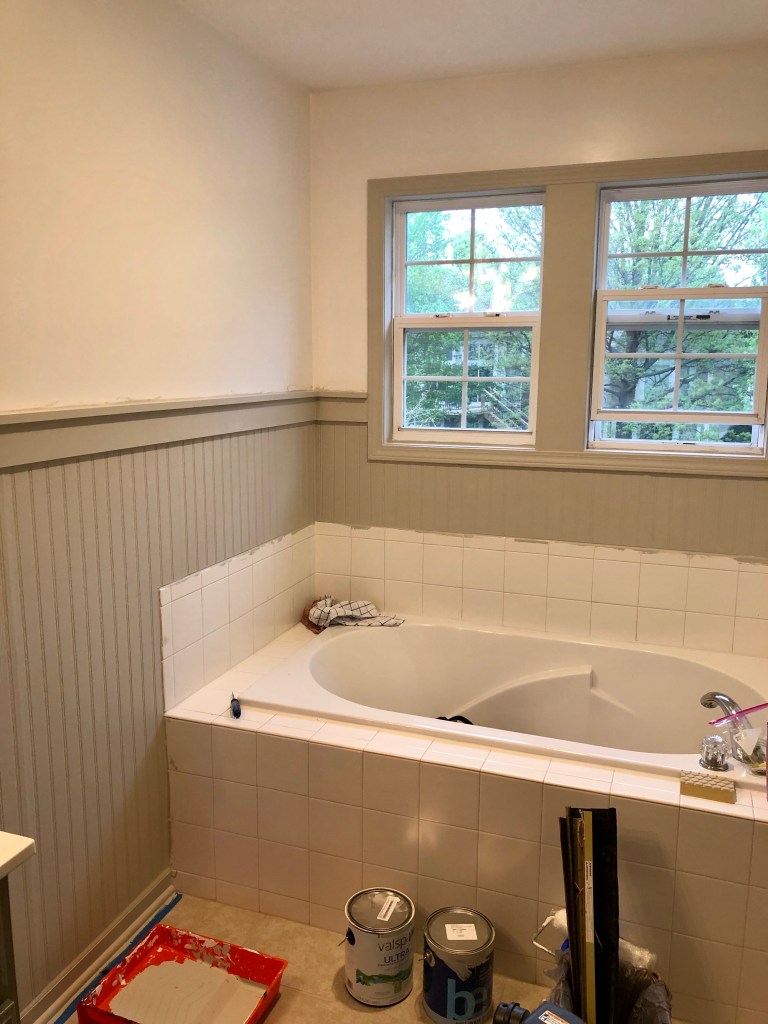
Walls are Bohemian Lace by SW

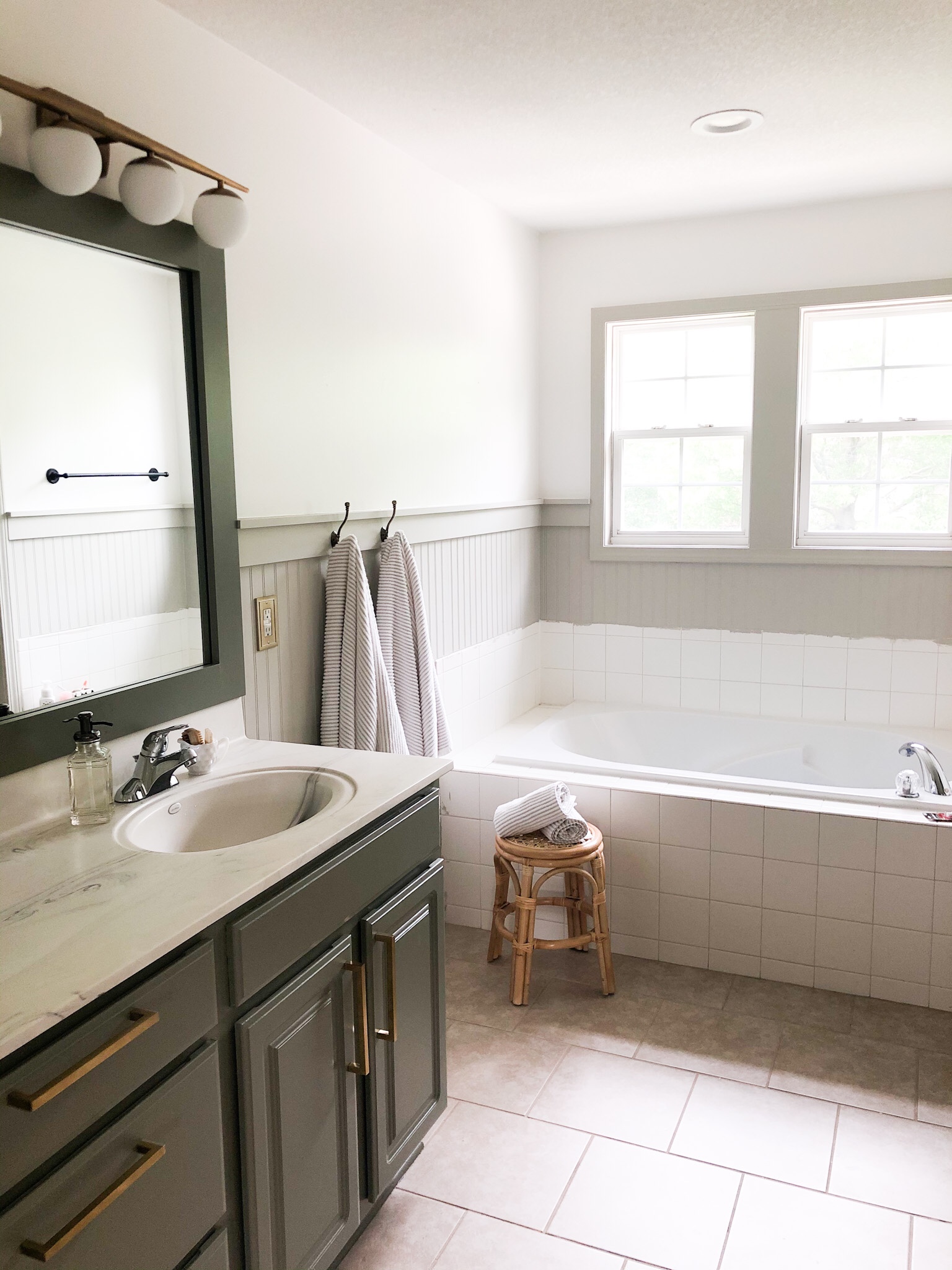
I used a large brush to brush the grooves then used a small foam roller to cover the beadboard. You’ll notice I didn’t use tape on the tiles because I have a fun project in store for those next. I painted the window, door trim, and doors the same color as the beadboard/border. After completing this we hung the DIY mirror frames, new light fixtures, and will soon be getting matching brass faucets to complete the project. YAY! New master bath here I come for some relaxation time!!!!

Laundry Room Floor Makeover

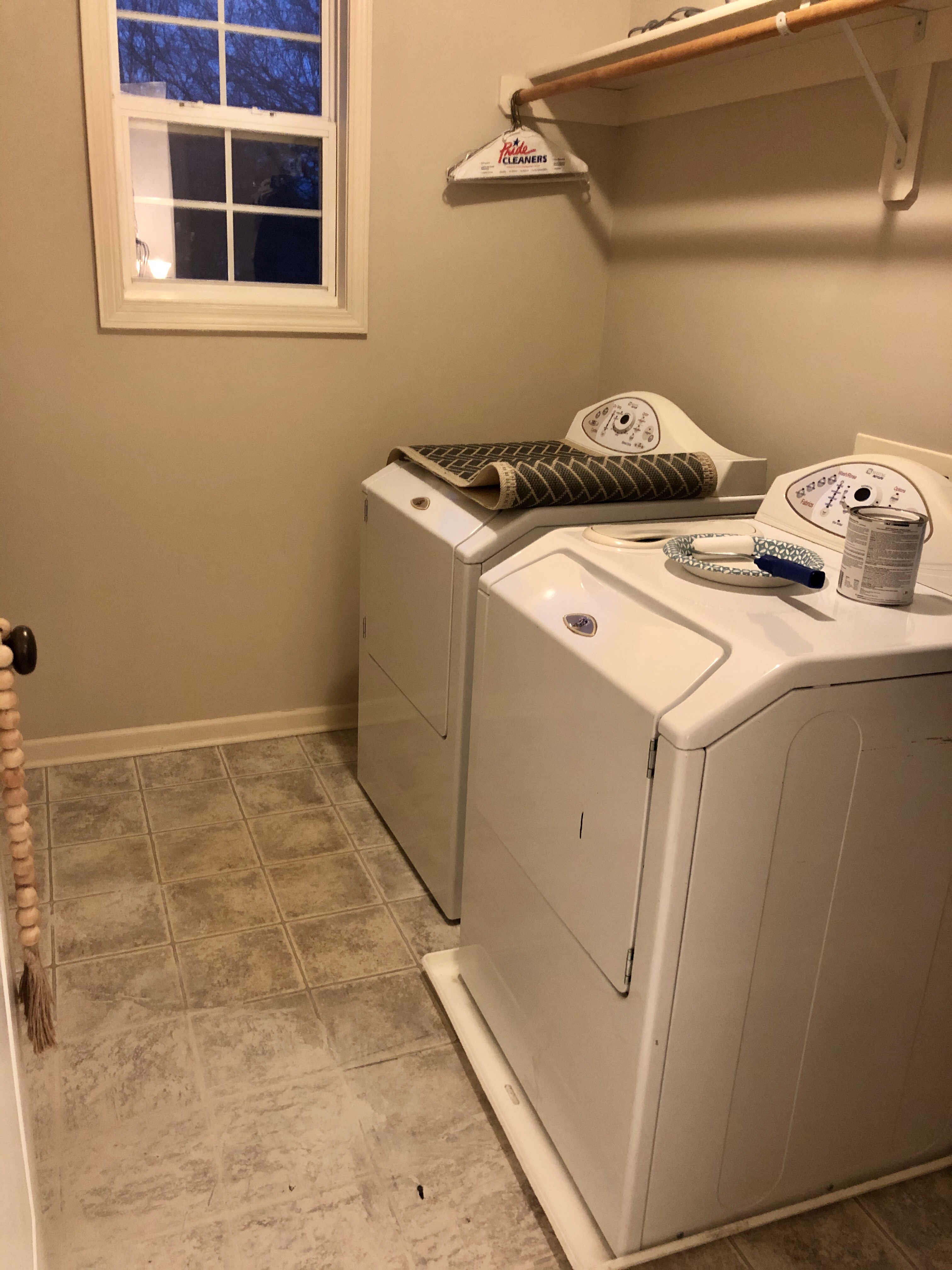
When we bought our home, one of the areas that bothered me the most was the laundry room. Specifically the floor. It was dirty linoleum with a giant paint stain on it where someone must have spilled a can of paint and never cleaned it up.

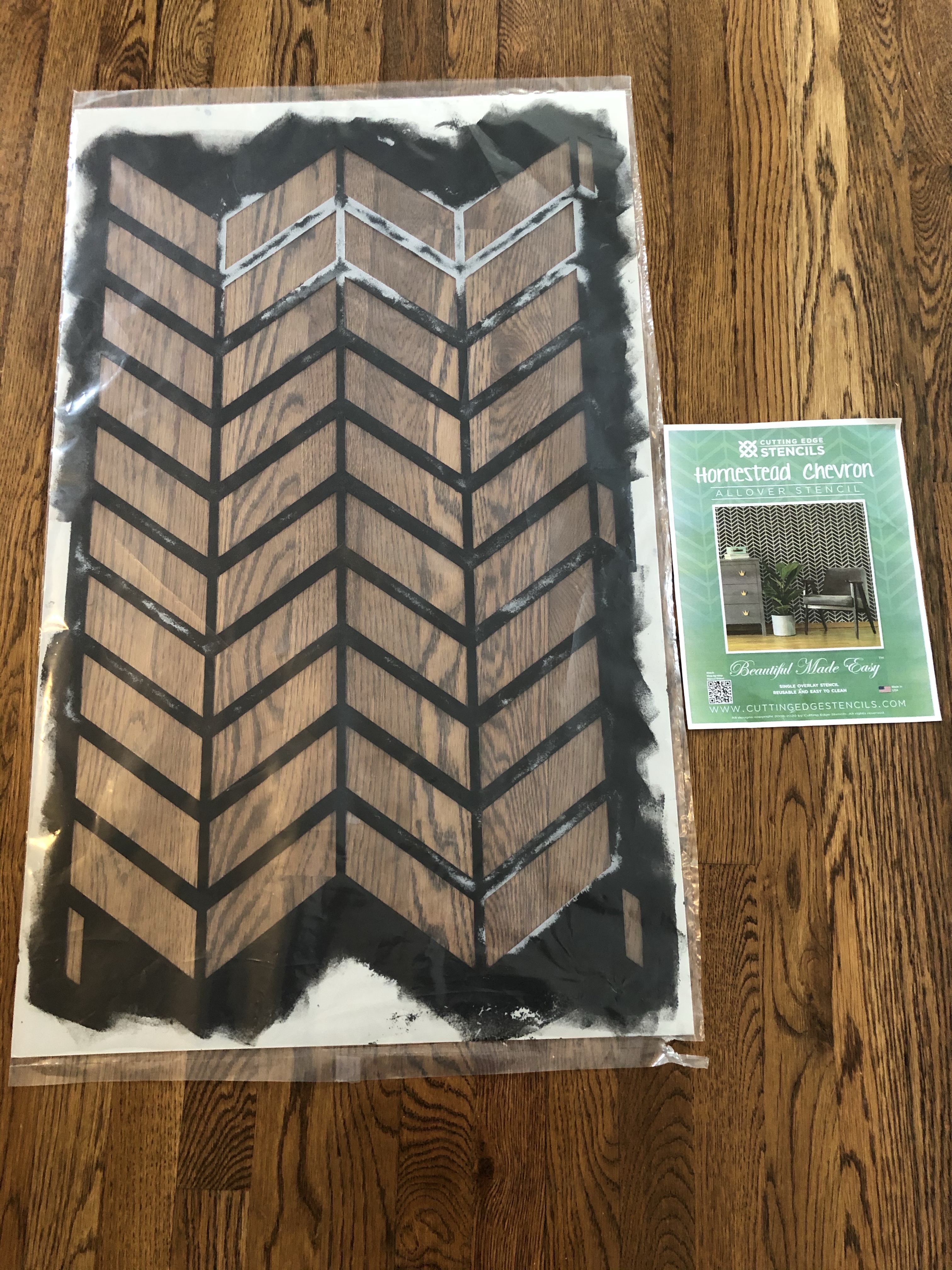
As much as I wanted to immediately rip up the linoleum and lay tile in here it was not at the top of our priority list. There were way more important things like, no light fixtures in the house except “boob lights” in the bedrooms. For some reason the previous owners decided to take the fixtures with them I guess? Not cool. Anyway, I did a lot of research and came across the Cutting Edge Stencils Instagram page. You can paint a floor?!? Yes pleeeeease. So I ended up picking a chevron wall stencil and using it as the pattern for my floor. I will say it was a time consuming process, but definitely worth it for the results. I was able to change the look of the entire room with paint and a stencil. And the result looks very similar to tile!

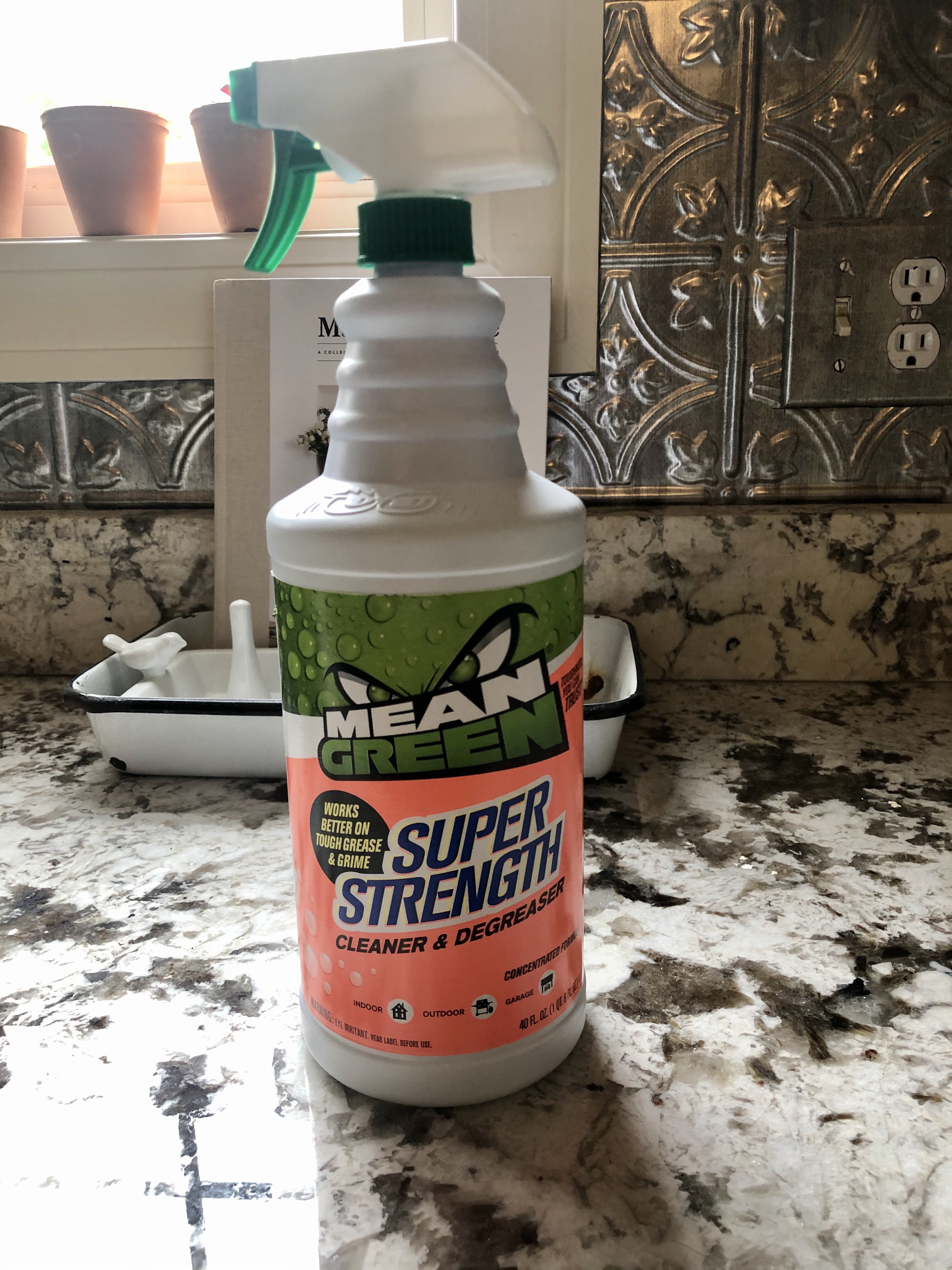
Step 1: They recommend to clean the floor with a degreaser. I used this product from Lowe’s. It was cheap and did the job.

Step 2: Prime the floor with a bonding primer. They recommend Stix which is what I used. I did 2 coats and it worked extremely well. I had no issues getting my paint to adhere to the floor after using this. I applied one coat, waited 2-3 hours and applied the second coat. A small foam roller worked great.

Step 3: Base coat. I wanted white grout lines so I used a white base coat. The stencil company said to use a decent quality wall paint, however I spent a little more for an outdoor patio paint because every paint expert I talked to said wall paint would not hold up, even when sealed with polyurethane at the end. So it may be fine but I didn’t want to take the risk. I used Valspar from Lowe’s. I started with cutting in with a large paint brush (my favorite brand is Purdy). Then I used a foam roller to apply my base coat to the rest of the floor, waiting at least 2 hours between coats. I also made sure to tape my trim before I started.

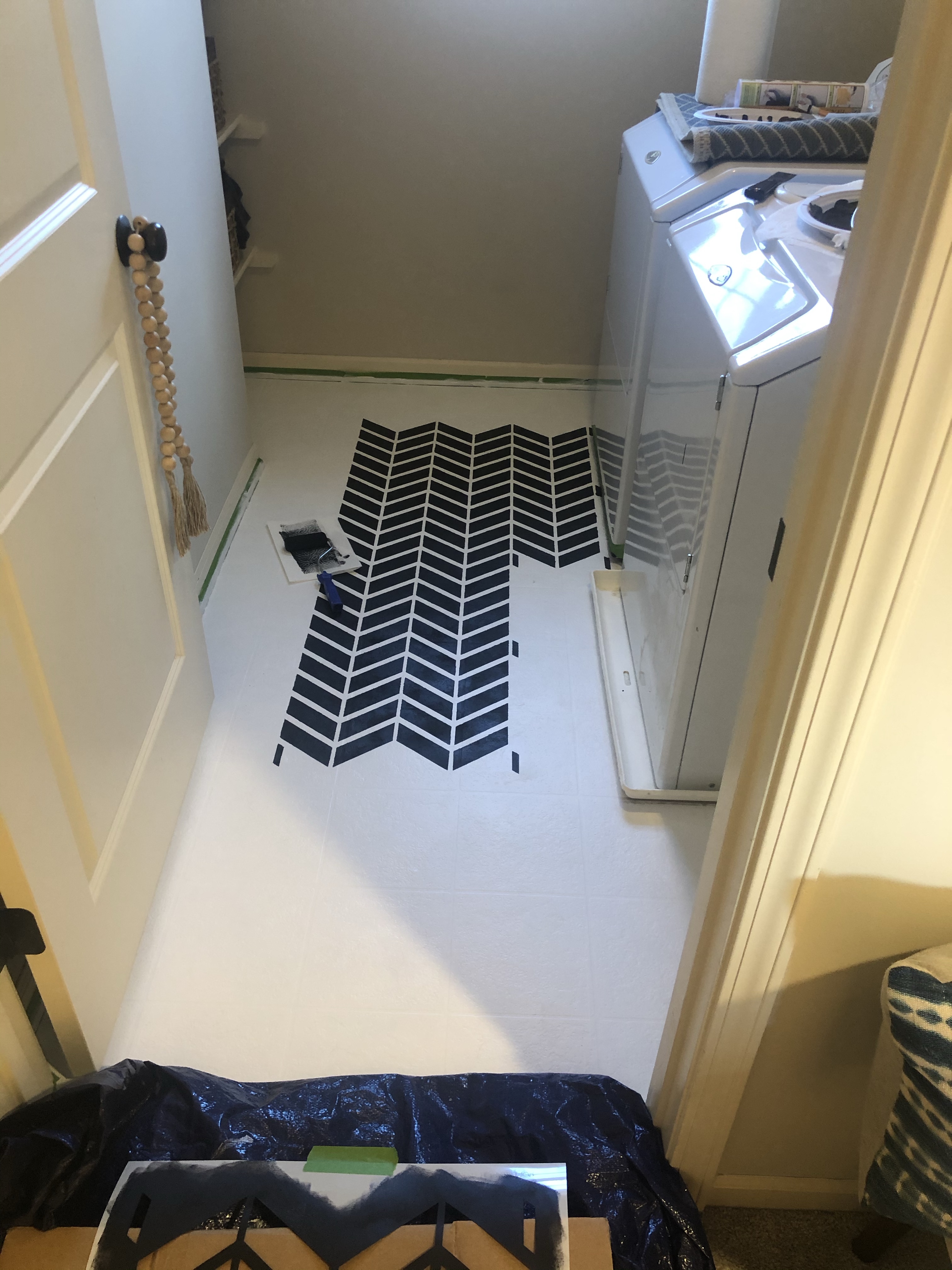
Step 4. The FUN part. Stenciling the floor. I chose to start in the middle of the floor so it would look more natural. If I had started at the edge I would have a clear line where my stencil had ended. And I wanted my pattern to appear as though it was going under the floorboard just like tile. How did I choose a stencil pattern, you ask?? There are so many cute options. Most pictures I saw of stenciled floors were using a square tile stencil to fit existing tile/linoleum between the grout lines. However, I have always wanted a chevron or herringbone tiled floor so I went with a chevron pattern which was technically a wall stencil.

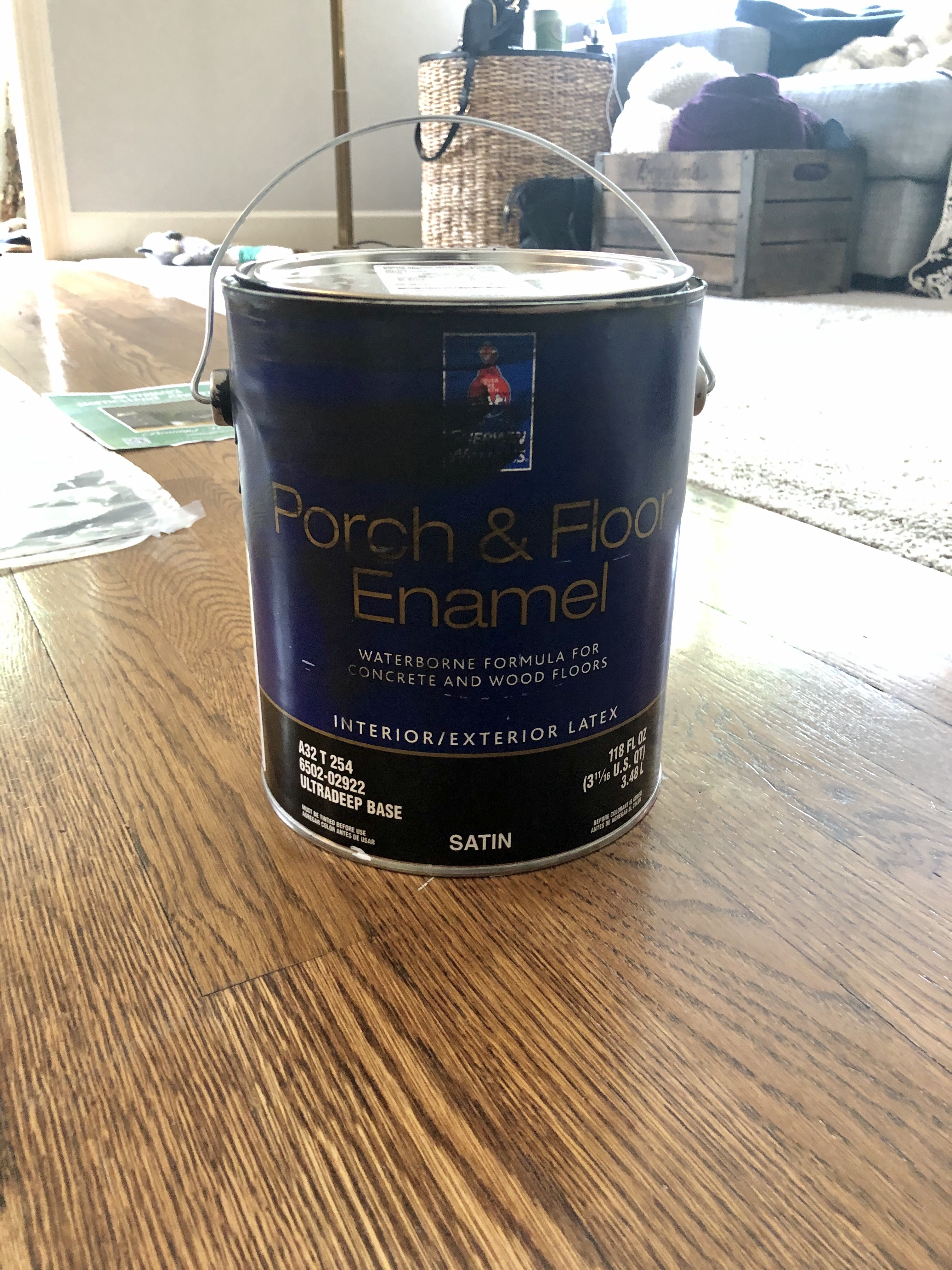
Before I started stenciling I sprayed the back of the stencil with a spray adhesive to prevent movement while painting. Make sure to use an adjustable spray adhesive to prevent the stencil from sticking to the floor. I found this at Michael’s. I then laid out the stencil in the center of the floor and used my foam roller to apply the paint. I used Porch and Patio Enamel in Caviar Black from Sherwin Williams. I again paid more for a high quality paint that I knew would hold up through the laundry room traffic.

I prepped the roller by rolling it evenly in the paint then rolling it once or twice on a paper towel to offload some of the excess to avoid bleeding through the stencil. I very lightly started rolling the floor. You have to have a lot of patience for this part because the paint does not cover the floor in a few rolls. It takes many light back and forth motions to start to fill it in and then you can gradually increase the pressure of the roller as you go. If you start with too much pressure or too much paint, it’s bleeds really bad.

Once it was all filled in I pulled up the stencil. That’s my favorite part! You’ll notice there are notches to help line up the next part you are going to stencil. I always made sure to line those up perfectly before I started rolling the next section. You’ll notice in the above picture I didn’t move my washer and dryer out of the room. I didn’t want the hassle or for them to be disconnected during the whole project. So I moved them back and forth during each step to cover just enough under them to appear the entire floor was done. Because I know I will be laying tile at some point, I was fine with this. If this is a permanent thing I would probably move them out of the room entirely, in case you ever get new appliances that cover a different area. Now for the tricky part, the baseboards. A tool that is definitely needed for this area is a stencil brush. I ordered one from the stencil website but you can just pick one up from Lowe’s or a craft store. The best way I found to stencil up to the wall/baseboard was to fold the stencil up against the wall and push down the stencil with my fingers while blotting the floor with my stencil brush. I also off loaded the stencil brush on my paper towel before using it on the floor to avoid bleeding. Don’t worry about a little bleeding during this part, it’s going to happen but you can fix it later. The important part is you are tapping the floor with the brush to fill in the paint, versus brushing back and forth as you’d normally use a paint brush.

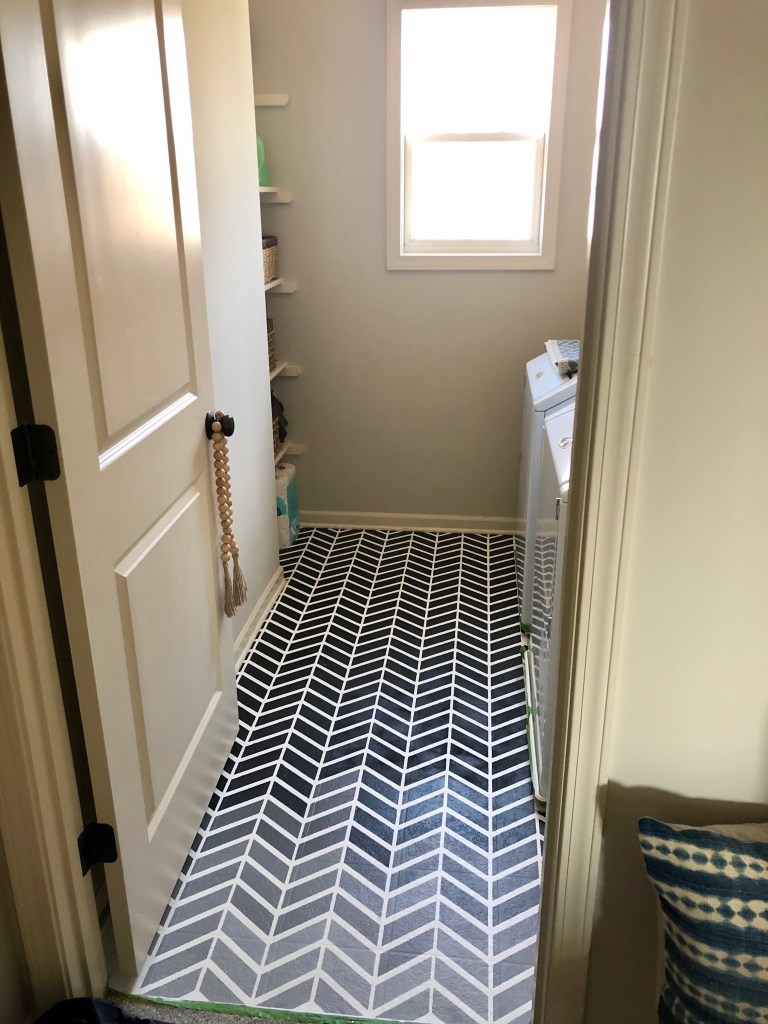
So once I had a little over half of the floor done, I decided I wanted to do something a little more unique that just a black and white pattern. I made an on the fly decision to do an hombre color change with grey. So I gradually mixed in white paint to my black to make dark grey and kept mixing in white as I stenciled until I ended with a very light gray color.

One thing to note while moving the stencil around from section to section is that while the paint does dry quickly because it’s a thin coat, it did make some marks when I was positioning it in the next spot. To avoid this I used my hairdryer to make sure the part I just stenciled was all the way dry before placing the stencil again. Sometimes you’ll have to place it over a part you just stenciled to line it up correctly for the next section. I also used my hairdryer to dry the stencil itself before placing it again to make sure I wasn’t getting paint marks where I didn’t want them.

Step 5: To get the best durability, I sealed the floor after I was done stenciling with polyurethane. It’s recommended to do at least 2 coats so that’s what I did. I used my foam roller again to apply this.

Step 6: After the stenciling is complete, you’ll want to do some touch ups to clean up any spots that may have bled through the stencil. I found no matter how careful I was, this happened in some areas. I used the thinnest paint brush I could find at my house to use my white paint to clean up the lines. Even if this is not perfect I found that your eye looks at the pattern as a whole when it’s all finished. So I worried about the imperfections when they didn’t really matter in the end.

THE FINISHED PRODUCT

SO much better than before. I’ve been using the floor for about 3 weeks now and everything is still looking good so far. I don’t think that paint is chipping anytime soon with all the steps taken to ensure it’s durability. I already have my next stencil project planned because it’s addicting!!!

Introduction

Hi! I’m Mindy, the HER of Her Idea His Project. We recently bought our first house together and from day one I had a very long list a things I wanted him to do and visions I wanted him to help me bring to life. It’s sort of a joke on the whole “honey do” list but sort of not. He does not actually have a choice most times; he has to participate. Ha! I am very lucky to have a guy who is willing to put up with all of my requests when it comes to our home project list. I am a dietitian and diabetes educator by trade but I have a huge passion for home decor and design. And it has escalated way higher since buying our Tudor home which I fell in LOVE with from the very beginning. It was actually the first and last house we looked at in the buying process and we weren’t even looking for that matter. I was looking on Zillow, as I do most nights, just for fun. I’m always curious about what is available on the market and also love to see what people have done with the interior of their homes. I love gathering ideas from homes on the market, my favorite designers, and DIY’ers. Then I kind of mesh it all together into something that brings me joy. I can’t wait to write about my projects to add to the world of ideas and hopefully create inspiration for others as so many people have for me. Thanks for being here!

Design a site like this with WordPress.com
Get started